
Quick Links: Letter, Hungry for More, Moral Authority, Making the Connection, Further Reading, Next Steps
Hungry for More: Letter Seven
We in our western world are deeply influenced by Greek thought when it comes to the idea of “perfection.” For them, perfection is essentially connected to the concepts of changelessness and motionlessness. Any kind of change is less than perfect; obviously, it is not good for something to change from better to worse, but if something changes from worse to better, it still is “less than” what it could be because it is still subject to motion. Perfection is therefore understood to be a tranquil state of motionlessness, stationary, even static, above and beyond any change at all.
So, often, when we speak of perfection we immediately think of a state of absolute attainment. This is behind the proverbial statement, “I’m not perfect.” The assumption is that perfection is a state of being where we have attained all there can be attained. Some even have taught a “sinless perfection” that can be experienced in this earthly and mortal life. This is simply not Scriptural. The Hebrew understanding is very different from the Greek mind on this.
On one hand, motion in and of itself is chaos, because nothing is solid, but constantly changing. God Himself is described as a rock that can be trusted not to change as opposed to the fleeting things of this world. But on the other hand, Scripture always speaks of growth, and growth means change. If we do not change it is because we are unrepentant, and in the end, fall away from God, an eternal motion into the abyss.
The classic text comes from St. Paul’s own testimony in Philippians 3:12-15.
Not that I have already obtained this or am already perfect (emphasis added); but I press on to make it my own, because Christ Jesus has made me his own. Brethren, I do not consider that I have made it my own; but one thing I do, forgetting what lies behind and straining forward to what lies ahead, I press on toward the goal for the prize of the upward call of God in Christ Jesus. Let those of us who are mature (emphasis added, same root as “perfect” above, often poorly translated “mature”) be thus minded…
Here we have the paradox which we have been trying to explain about perfection. On one hand St. Paul claims that he has not reached all there is to attain (i.e. the perfection of Christ), but keeps “pressing forward,” and by doing this, by having this trajectory or orientation, he considers himself “perfect.” For us, perfection is not static but dynamic.
Gregory of Nyssa’s Teachings on Perfection
Gregory of Nyssa has a whole lot to say about perfection as we have unfolded it here. As quoted in From Glory to Glory: Texts from Gregory of Nyssa’s Mystical Writings, Selected and with an Introduction by Jean Danielou, S.J. St. Vladimir’s Seminary Press, NY, 1979 he teaches “that the perfection we attain by our own efforts is none other than that which is implanted in our nature at the beginning (210).” This means that God has placed a seed within each of us that aspires towards eternity by virtue of being made in God’s image, like a seed planted in the dark soil aspires to the sun.
Knowing that God is by nature infinitely beyond us, St. Gregory encourages us not to despair:
For [we] do have within [our] grasp the degree of the knowledge of God which [we]can attain. For, when God made [us], He at once endowed [our] nature with this perfection: upon the structure of your nature He imprinted an imitation of the perfections of His own nature, just as one would impress upon wax the outline of an emblem
Danielou, 1979, p. 101
Coming at this in another way, St. Gregory uses the analogy of the water pipe:
Often water contained in a pipe bursts upwards because of the force of the pressure, and it does this against its natural downward motion because it has nowhere else to go. So too is it with the mind of man. If it is confined on all sides by the water tight pipe of chastity, if it has no other outlet, it will be raised up by the very tendency of its motions of love of higher things. For it is impossible for our human nature ever to stop moving; it has been made by its creator ever to keep changing. Hence when we prevent it from using up its energy on trifles, and keep it on all sides from doing what it should not, it must necessarily move in a straight path towards the truth
Danielou, 1979, p.103
In a nutshell, St. Gregory describes our life of perfection as an adventure of discovery. The closer we move to God, the deeper the longing for more. We attain and are joyful in our discoveries, but since God is inexhaustible, we long for more. This is true in this life and in our life of glory to come. There is no room for boredom in this life and the next. On the contrary, a life without challenge and little demanded of us goes contrary to our core identity, is inauthentic, and in the end leads us into sin, and sin takes us to boredom and despair.
Since our culture persists in understanding spiritual and moral perfection as some unattainable ideal, it rejects the whole idea in any form because it makes demands on us. Instead, our culture sets the bar so low that everyone can enter into an inclusive egalitarian society, a sort of utopian dream, built upon modern theories of social engineering. This is in direct conflict with Jesus’ Kingdom, where we must strive to enter through the narrow gate.
Though Jesus embraces the poor and the outcasts, and castigates the religious elite for being exclusive, there is absolutely nowhere in the Gospels where He supports an “everyone gets a trophy” mentality. The challenge of perfection is presented to everyone alike, both poor and rich, underprivileged and privileged. Indeed, it is the poor who are more likely to take up the challenge. Again, Jesus loves us all where we are at, but loves us all too much to leave us there.
Moral Authority
Sources for Catholic Teaching
Scripture References
John 17:22-23 The glory which you have given me I have given to them, that they may be one even as we are one, I in them and you in me, that they may become perfectly one. So that the world may know that you have sent me and have loved them even as you have loved me.
Romans 12: 2 Do not be conformed to this world but transformed by the renewal of your mind, that you may prove what is the will of God, what is good and acceptable and perfect
Ephesians 4:11-16 And his gifts were that some should be apostles, some prophets, some evangelists, some pastors and teachers, to equip the saints for the work of ministry, for the building up of the body of Christ, until we all attain to the unity of faith and of the knowledge of the Son of God, to mature manhood, to the measure of the stature of the fulness of Christ, so that we may no longer be children, tossed back and forth and carried about with every wind of doctrine, by the cunning of men, by their craftiness in deceitful wiles. Rather, speaking the truth in love, we are to grow up in every way into him who is the head, into Christ, from whom the whole body, joined and knit together by every joint with which it is supplied, when each part is working properly, makes bodily growth and upbuilds itself in love.
Philippians 3:12 Not that I have already obtained this or am already perfect; but I press on to make it my own, because Christ Jesus has made me his own.
2 Timothy 3: 16-17 All Scripture is inspired by God and profitable for teaching, for reproof, for correction, and for training in righteousness, that the man of God may be complete, equipped for every good work.
1 John 4:18 There is no fear in love, but perfect love casts out fear. For fear has to do with punishment, and he who fears is not perfected in love.
Catechism references
1827 The practice of all virtues is animated and inspired by charity, which ‘binds everything up together in perfect harmony’, it is the form of the virtues; it articulates and orders them among themselves; it is the source and the goal of their Christian practice. Charity upholds and purifies our human ability to love, and raises it to the supernatural perfection of divine love.
1953 The moral law finds its fullness and unity in Christ. Jesus Christ is in person the way of perfection. He is the end of the law, for only he teaches and bestows the justice of God: “For Christ is the end of the law, that every one who has faith may be justified.
2015 The way of perfection passes by way of the Cross. There is no holiness without renunciation and spiritual battle. Spiritual progress entails the ascesis and mortification that gradually lead to living in the peace and joy of the Beatitudes:
He who climbs never stops going from beginning to beginning, through beginnings that have no end. He never stops desiring what he already knows.
Vatican documents
The Catholic Church’s teaching on perfection is primarily found in the Catechism of the Catholic Church and the Second Vatican Council’s Pastoral Constitution on the Church in the Modern World, Gaudium et Spes, among other documents. Perfection is described as the fullness of Christian life and the perfection of charity, with all Christians called to strive for it by imitating Christ and perfecting their love for God and others. While absolute perfection is reserved for heaven, a state of spiritual union with God through charity is attainable in this life.
Key Concepts
- The Call to Holiness:
- The Church teaches that every Christian is called to the fullness of the Christian life and to the perfection of charity, as stated in the Catechism.
- Imitating Christ:
- Perfection involves striving to attain the ideal of Christ, who is the model for all Christians.
- Charity as the Core Virtue:
- Perfection is understood as the perfection of charity, or love, which unites the soul to God.
- A Spiritual Union:
- Perfection in this life is a spiritual union with God, achieved through grace and the practice of charity.
- The Narrow Path:
- The Christian life demands loyalty, perseverance, and self-sacrifice, leading Christians to take the “narrow way”.
Key Documents
- Catechism of the Catholic Church:
- States that all Christians are called to the fullness of Christian life and the perfection of charity.
- Gaudium et Spes (Pastoral Constitution on the Church in the Modern World):
- A key document from the Second Vatican Council that discusses the need for all human activity to be purified and perfected through the paschal mystery of Christ’s cross and resurrection.
- Perfectae Caritatis:
- The decree from the Second Vatican Council that called for Religious to renew their vocations in accord with the Gospel and the spirit of their founders.
What Christian Perfection Is Not
- Not Absolute Perfection:
- Absolute perfection, a state of being without any human misery or sin, is reserved for heaven.
- Not Just Sanctifying Grace:
- While sanctifying grace is essential, perfection is determined by the actual practice of charity and service of God.
Making the Connection
A Real-Life Example
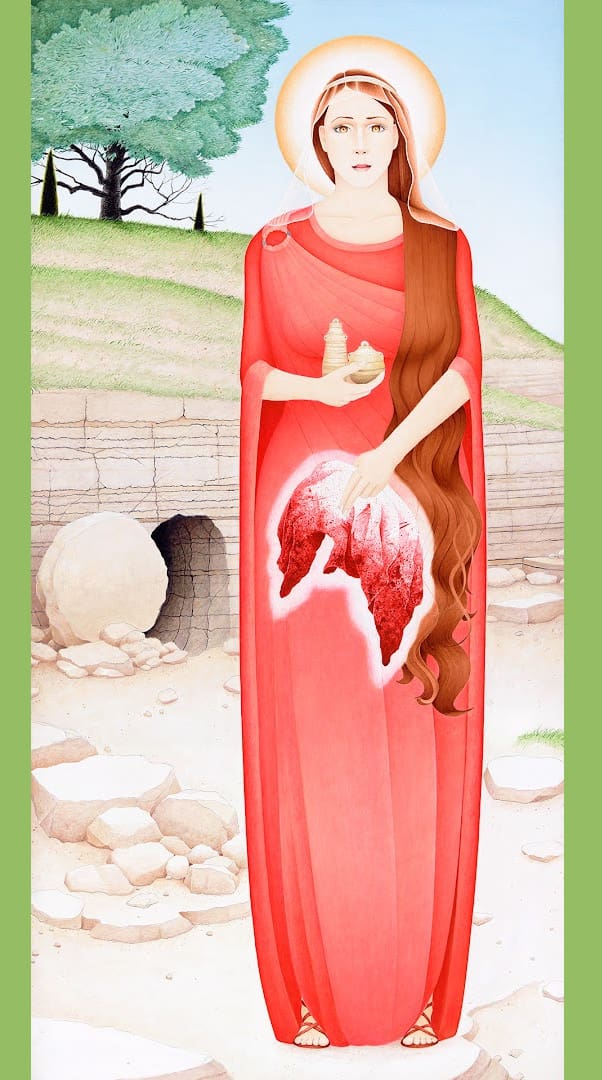
In the Catholic Church, the concept of “perfection” is often understood as a striving for union with God through love and holiness, rather than a state of flawlessness or sinlessness achieved on Earth. Saints, through their lives of deep faith, prayer, and virtuous living, serve as inspiring examples of those who have journeyed on this path. The path is not easy but what is important is their perseverance. Margaret of Cortona is one such saint.
Margaret of Cortona did not start life as a saint and showed great weakness to temptation which she later overcame through prayer and good works.
Margaret was born to a farming family in Italy in 1247. At seven her mother died and two years later, her father remarried. Unfortunately, her stepmother did not care for her. She was a very attractive girl, who thirsted for the affection denied her at home. A young cavalier from Montepulciano induced her at the age of 12 to elope with him, and although promising to marry her, he never did. She lived openly with him as his mistress for nine years causing her great scandal and bearing him a son.
One day after he had failed to return from visiting some of his estates, the family dog returned without him. She set out to look for him following the dog who led her to his body. He had been murdered. She immediately felt great remorse at her estrangement from God and her family. She gave away to her dead lover’s family all the possessions she had and returned home to attempt a reconciliation with her father. However, at the urging of her stepmother, her father refused to take in Margaret and her son.
In desperation she sought refuge with the monks of St. Francis in the town of Cortona. Arriving there she met two women who took pity on her and took her in. They also introduced her to the Franciscan monks who counseled her. She struggled against the temptations of her prior life, alternately going through periods of exultation and despair. She sought to fight temptation by exhibiting her penitence in excessive ways such as going to mass at Montepulciano with a rope around her neck, but the friars counselled her against such excesses and recommended that she try to find peace by helping others. She followed that advice and started a life of prayer and caring for the sick and poor. She moved from the house of the women who had taken her into a small cottage, where she lived on alms which she used primarily for the poor, keeping very little for herself.
In three years she was able to overcome her temptations and reach a higher plane of spirituality. She then sought to become a member of the Third Order of St. Francis. Impressed with the sincerity of her conversion, the monks admitted her. Soon after, her son entered school away from home and eventually became a Franciscan. She seemed to have reached a level of spirituality where she developed a deep and personal relationship with God.
In 1286 the bishop of Arezzo granted her a charter to continue her work for the sick and poor on a permanent basis. Eventually she opened a hospital with other Franciscan women whom she formed into a congregation.
But her trials were not over. Because of Margaret’s prior sinful life there were those who doubted her sincerity and began casting aspersions on her relationship with the friars. The pressure from these scandalous rumors were such that the Franciscans transferred her principal spiritual advisor, Fra Giunta, to a distant monastery to stop them. For a time even her ability to pray was affected. However, she bore these trials patiently and persisted in prayer, meekly and humbly accepting God’s will. One day in prayer she heard God’s call to summon others to Him by preaching.
Margaret began to preach repentance. Her efforts were rewarded, and her fame spread. Conversions through her preaching were many, and people came from all over Italy, Spain, and France. Miracles of healing also occurred through her. Even the people of Cortona, who had distrusted her, were won over.
She died on February 22, 1297 at the age of 50. She was publicly proclaimed a saint on the day of her death, and the people of Cortona built a church in her honor. Maragaret was not canonized until 1728 by Pope Benedict XIII. Her feast day is celebrated on February 22.
From: Life of St. Margaret of Cortona – St. Margaret of Cortona – Riverside, NY
Further Reading
Additional Reading Materials
Dion, Philip E. A Handbook of Spiritual Perfection. Manchester, New Hampshire: Sophia Institute Press.
The author gives practical methods to fully take advantage of the many spiritual means God has made available to help one grow in holiness. Including, but not limited to, he shows how to:
- Motivate yourself to grow in holiness
- Pray more deeply
- Root out your dominant fault (and others, too)
- Make your confessions more fruitful
- Abandon oneself to God’s will
Campbell, Colleen Carroll. The Heart of Perfection: How the Saints Taught Me to Trade My Dream of Perfect for God’s. New York: Howard Books, 2019.
The author addresses what she describes as the most dangerous form of perfectionism – spiritual perfectionism – in which we think we can earn God’s love. Rather than virtue, “…it is a toxic cycle of pride, sin, shame, blame and despair that distorts our vision, dulls our faith and leads us to view others through the same hypercritical lens we think God is using to view us.” She uses the “…stories of seven ex-perfectionist saints to show us a new kind of perfection: Freedom in Christ.”
Niequist, Shauna. Present Over Perfect: Leaving Behind Frantic for a Simpler More Soulful Way of Living. Grand Rapids: Zondervan, 2016.
This book is a collection of essays that focuses on the author’s transformation to “…leaving behind busyness and frantic living and rediscovering the person you were made to be…” it is described as “ …a hand reaching out, pulling you free from the constant pressure to perform faster, push harder, and produce more, all while maintaining the exhausting image of perfection.”
Next Steps
Ready to Take the Next Step?
How can we help our families become more comfortable talking about difficult issues? Study, Prayer and Practice!
How can we distinguish between an opinion and Revelation? Study, Prayer and Practice!
📖 Study
To study about saintly perfection, consider the following approaches:
- Reflect on Saintly Mentors: Study the teachings of saints like St. Francis de Sales and St. Jane de Chantal to gain insights into their views on perfection. Read about St. Teresa of Avila’s “Way of Perfection” to understand her approach to spiritual growth and perfection.
- Saintly Virtue: Take the free online course “Becoming a Saint: Wisdom from Aquinas to Grow in Virtue” by Dr. Andrew Whitmore through Christendom College.
💖 Prayer
Here is a simple but powerful prayer you can pray daily:
7th Prayer of St. Bridget:
O Jesus! Inexhaustible Fountain of compassion, Who by a profound gesture of Love, said from the Cross: “I thirst!” suffered from the thirst for the salvation of the human race. I beg of Thee O my Savior, to inflame in our hearts the desire to tend toward perfection in all our acts; and to extinguish in us the concupiscence of the flesh and the ardor of worldly desires. Amen.
✝️ Practice
The pursuit of Christ-like perfection is a journey. Perfection refers to a state of wholeness in our relationship with God, striving to trust God completely, to love Him above all things, and to love others for love of Him. Be patient with yourself, we all have areas in which we struggle. Recognize small improvements that you make along the way. To practice saintly perfection in the Catholic tradition, one can pursue the following steps. These steps are not meant to be a checklist but rather a continuous journey toward holiness and perfection. Each person’s path will be unique, and the journey will require patience, humility, and a willingness to learn from their experiences along the way.
- Frequent reception of the sacraments, especially Holy Eucharist and Confession: We need a constant infusion of God’s grace and mercy in order to advance in the spiritual life. St. Thomas Aquinas in his Summa Theologica says, “God moves the human spirit to good: nevertheless, it could resist. It is God’s doing, then, that a man prepares himself to receive grace. If he lacks grace, then the cause of the failure lies in him, not in God.”
- Develop Purity of Conscience: This involves stripping away pretensions and cynicism, restoring innocence, and developing charity. It is a necessary step for spiritual advancement.
- Develop a Regular Practice of Virtues: The Theological virtues are Faith, Hope, and Charity. The Cardinal virtues are Prudence, Justice, Fortitude, and Temperance. These virtues are considered essential for a virtuous life.
- Participate in the Divine Nature: Engage in a dynamic process of conversion and transformation, recognizing that perfection involves participating in the Divine Nature. St. Peter instructs, in 2 Peter 1:4 “Through these he has given us his very great and precious promises, so that through them you may participate in the divine nature, having escaped the corruption in the world caused by evil desires.” Divine Nature is the source of God’s being and the potential for Catholics to reflect His character through faith and the power of the Holy Spirit
- Practice forgetting what lies behind: St. Paul teaches us, in Philippians 3:13-14, “Brothers and sisters, I do not consider myself yet to have taken hold of it. But one thing I do: Forgetting what is behind and straining toward what is ahead. I press on toward the goal to win the prize for which God has called me heavenward in Christ Jesus.”